
Reversing the Youth Reading Recession
Independent schools are relying on science ... and parents

Most kids don’t read anymore. It’s easy to point fingers at the Covid-19 pandemic, but the reality is more complicated.
This reading “recession” actually started over a decade ago. According to the federal government’s Nation’s Report Card, reading scores steadily increased from the 1970s to 2012, plateaued, and then started to slide after Covid. Just 14% of 13-year-olds self-reported that they read for fun nearly every day in 2023, versus 27% in 2012. Nationally, only 37% of fourth graders read at grade level.
What happened?
Phonics Deemphasized
Up until the 1970s, teachers used phonics-based techniques — sounding out words — to teach children to read. Starting in the 1980s, phonics was deemphasized in favor of “cueing” strategies. In addition to phonics, young students memorized short “sight” words (such as the, see, and, play). They were also encouraged to guess unfamiliar words based on story pictures or sentence context.
Phonics slowly started making a comeback after a Department of Education study in 2000 found that some of these old-school methods were most effective for early readers.
Yet teaching colleges have been slow to react to this change in philosophy. According to the National Council on Teacher Quality’s 2023 report, half the colleges studied have not sufficiently changed instruction materials to adequately teach skill-based structured literacy (or “The Science of Reading”) — phonemic awareness, phonics, vocabulary, fluency and comprehension — and have not deemphasized cueing techniques.
Technology’s Lure
Television, videos, gaming, computers and cellphones own a major piece of how our youth spends their time. According to a study shared by the American Association of Pediatrics, children in early grades spend over 3½ hours per day on screens. Tweens (ages 8–13) spend 5½ hours and teens spend 8½ hours, which includes significant time on social media.
Short snippets. Instant gratification. Why read a book?
The Scientific Approach
We asked independent schools in our area about their approaches to reaching reading and what tips they have for parents to foster a love of reading in their children. All schools we interviewed confirmed their use of a scientific approach with evidence-based strategies that build on one another.
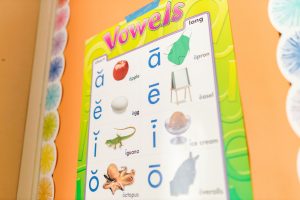
Kim Wagner, Head of Lower School at Tatnall School, emphasized using all skill areas in The Science of Reading. Phonics is the center, but the other skills, such as vocabulary, fluency and comprehension, are vital. “We know from research that having a robust vocabulary makes learning how to read much easier. We read [our students] great, robust books in preschool in kindergarten, because having that background knowledge and that robust vocabulary is going to help make the reading process, the phonics piece, so much easier.”
Love of Reading
All schools agreed that teachers showing their love of literature by enthusiastically reading out loud is contagious, especially to younger children. It’s an important part of every school day.
Katie Zuber of Kimberton Waldorf School said they strive to create a culture in which reading is something children naturally want to do. “Of course, we want students to become capable, confident readers,” Zuber said. “But we also want them to become the kind of people who reach for a book because they are curious, because they want to be transported somewhere, or because they want to understand something about themselves or the world.”

Teachers also agreed that every child is different and may have different tastes in reading. Finding books that excite them can help open the door to becoming lifelong readers. “Our library is a central element of the lower school,” said Chris Loeffler of Wilmington Friends School. “Classes visit consistently throughout the year to hear a read-aloud and check out books, and our librarians work hard to get to know our students and help them find books that interest them.”
Wagner from Tatnall School said that reading unchallenging literature shouldn’t be frowned upon. “Kid humor, graphic novels — they’re not very meaty. But if that’s all your child will read, and they’re excited to get in that book and read it — that should be encouraged. As long as they’re reading, they’re building their knowledge, they’re getting fluency practice, they’re building their vocabulary.”
Learning Difference

“Nobody loves doing something that’s really, really painful and difficult,” said Jim Miller of Delaware Valley Friends School. That’s why all of the schools try to spot challenges early on and apply appropriate intervention techniques. “A child who is not interested in reading — it doesn’t necessarily mean that they don’t care. It might mean that it’s especially effortful for them in ways that it isn’t for the parent,” he said.
Parents should always speak to the teacher about any concerns with reading skills. Schools have programs in place to provide the specific instruction to meet each child’s needs.
How Parents Can Help
Schools agree that students seeing their parents read sets a powerful example. “One of the most important things parents can do is model the behavior they hope to see,” said Evan Lober of Upland Country Day School. “When children see adults reading for enjoyment, curiosity or learning, they understand that reading is not simply something they are required to do for school.” Set aside family time devoted to reading physical books and model how to build reading into one’s daily life.
“Parents can take that a step further by reading the same book as their child,” Lober added. “A shared book creates natural opportunities for conversation. Parents can ask what surprised them, which character they connected with, or whether they interpreted a part of the story differently. These conversations help strengthen comprehension while making reading feel like a shared experience rather than another assignment or test.”

Teachers Casey Lyons and Kristen Thomas from Media-Providence Friends suggest making reading a regular part of the home routine. “Encourage children to read every day, listen to them read, ask questions about what they are reading, and talk about books together. Reading aloud to children — even older children — continues to build vocabulary, comprehension and a love of reading. Going to the library to select engaging books nurtures a love of reading.”
Calamaro of Delaware Valley Friends said, “If you’re trying to transition your child away from screens, a Kindle might be the way to go — give them Kindle screen time.” He also suggests books with the accompanying audio, which can make reading easier for those who have decoding or fluency challenges.
Wagner from Tatnall School had a tip that wouldn’t embarrass older students who struggle to read — turn on closed captioning on TV. “Your eyes can’t help but to look down at those words when they’re on the TV screen. And so, they’re hearing it and they’re seeing it,” she said.
Parents shouldn’t get discouraged if their child seems to be struggling. Always talk to the teacher. Have additional testing done if recommended.
“Some children are just slower to pick up reading skills, and it doesn’t mean it’s not coming. It’s just a little bit slower than their peers, and that’s okay. Phonics, reading fluency,” Wagner said. “It’s like riding a bike: once you know how to do it, you can always do it. Once you’ve cracked the code, you can read.”
What’s Happing In Pennsylvania
Pennsylvania changed Act 47 of the Public School Code to mandate statewide requirements related to structured literacy techniques, effective spring 2027. It requires professional development, updated curriculum materials, universal screenings and reading interventions for students in kindergarten through third grade.
This year the Pennsylvania House and Senate passed similar bell‑to‑bell cellphone bans for K–12 public schools. Governor Shapiro urged lawmakers to send him a final bill to sign. Note: Many schools have already adopted their own cellphone policies.
Our Favorite Resources
- Berk Hathaway Holly Gross
- Chester Cty Community Fdn
- Chester Cty Hosp, Penn Med
- Chester Cty Library System
- Colonial Theatre
- Delaware Museum of Nat & Sci
- Devon Horse Show
- Episcopal Academy
- Hershey’s Mill
- Key Financial, Inc.
- King Construction
- McComsey Builders
- Michael Cook Jeweler
- Monument Sotheby Int’l
- Natural Lands
- Osher Lifelong Learning
- Pennsylvania Hunt Cup
- Tim Vaughan
- Villa Maria Academy