
A Living Legacy: 50 Years of Jenkins Arboretum & Gardens
Images courtesy of Jenkins Arboretum & GardensThe story of the gardens
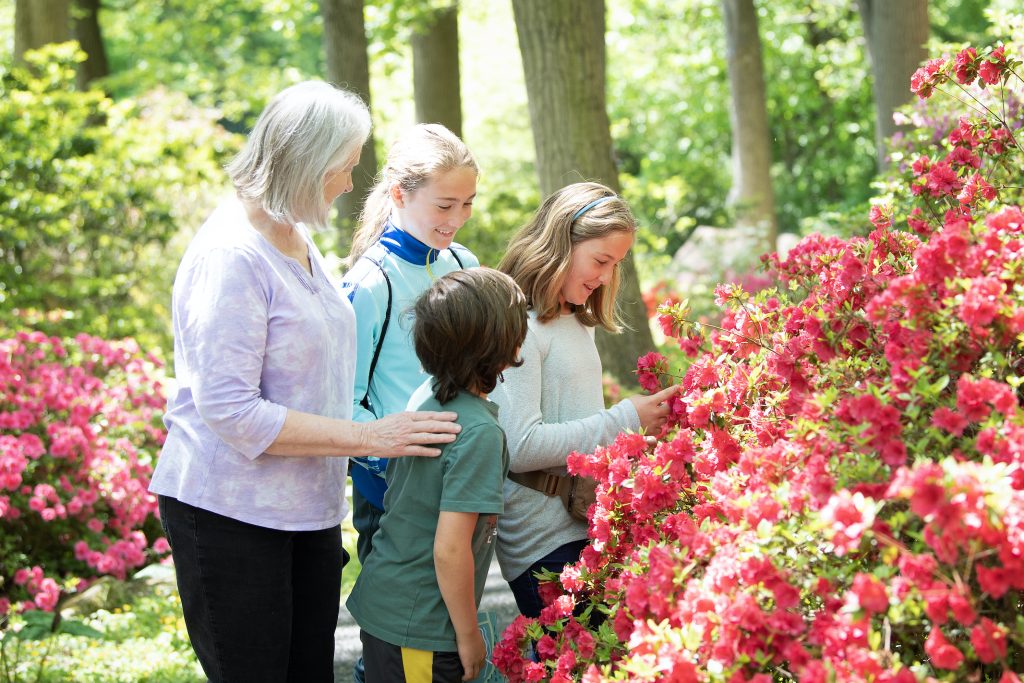 It was 50 years ago that a quiet woodland in Devon began its transformation into one of the region’s most beloved gardens. What started as a bequest from a man inspired by his late wife’s love for nature has flourished into a thriving botanical treasure. Since the beginning, everything at Jenkins Arboretum has been rooted in a mission to celebrate the wonder of plants and place as a destination for education, conservation and community connection. These principles have shaped every path, program and planting over the last five decades.
The Property
The 20 acres on which the gardens were first planned were the property of H. Lawrence and Elisabeth Phillippe Jenkins. The Jenkinses were neither wealthy nor famous, yet they lived comfortably and enjoyed the beautiful natural setting of their home.
When Elisabeth died in 1963, Lawrence preserved their 20-acre property in her memory. Through his will, he established that the property would be developed into a “public park, arboretum and wildlife sanctuary for the use of the public.”
Moved by Lawrence’s gesture, neighbor Louisa P. Browning deeded her adjacent 26 acres of woodland to Jenkins in 1971, more than doubling the size of the garden. The Browning property included an R. Brognard Okie-designed house along with an open meadow, woodland and a tennis court that later became a native plant nursery for the gardens.
The Plan
 Once the property had been set aside, a plan was needed to add plantings, visitor amenities and infrastructure to care for the gardens. Landscape architect George Erwin Patton was hired to develop a master plan to transform the site into a public garden. His plan included analysis of the soil, locations for a network of paths, and descriptions of plantings, along with the occasional line of poetry or reflection on the human-nature connection.
It’s astonishing to page through Patton’s plan and see how closely his vision has been realized in the gardens’ visitors’ experience today. Patton took a simple mandate from Jenkins’s will and expanded it to visualize the living landscape growing decades later.
In his plan, Patton mused about creating “the kind of place where people can walk among the trees, see the birds, observe nature’s many faces and moods and seasons; where people can find peace and quiet, refreshment and relief from urban stress.” Although written more than 50 years ago, this perfectly describes Jenkins today.
The Stewards
Throughout the 1970s, trails were created, a pond installed, a small visitor’s center constructed, and rhododendrons and azaleas planted. In 1974, Leonard H. Sweetman was hired as the first director, although it wasn’t until May 22, 1976, that Mr. Jenkins’s vision was finally realized when his property was officially opened to the public. After 12 years of service, Leonard passed the reins to his son, Harold E. Sweetman, Ph.D., who became Jenkins’s director in 1986.
Over the next several decades, major changes involved constructing a greenhouse and LEED-certified John J. Willaman Education Center, establishing the Hamilton Horticulture Apprenticeship, expanding the botanical collections, and adding full-time horticulture staff, seasonal interns and weekly volunteers.
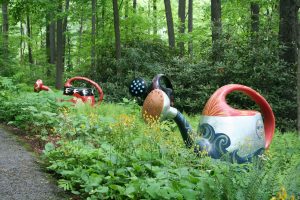
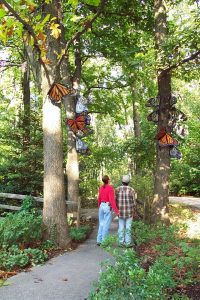
Many might remember Jenkins Arboretum best during this time for its whimsical, nature-based sculpture exhibitions. The “Monarch Gathering” in 2001 featured larger-than-life monarch butterflies clustered on trees and fences throughout the garden, followed by an exhibition of giant watering cans in 2006. Five years later, Jenkins hosted “Wind Through the Trees,” a kinetic and auditory sculpture exhibition in the gardens.
After more than 30 years of leadership, Harold Sweetman retired in 2019, and Jenkins welcomed Tom Smarr as its third director. With a bold strategic plan, reimagined master plan, refreshed visual identity and expanded staff, Jenkins continues to advance its mission, rooted in education, conservation and community connection.
The Present
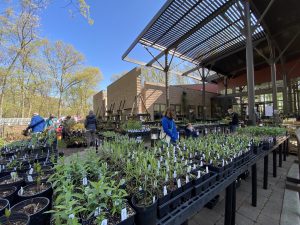
Today, a deep sense of connection continues to thrive as a place where visitors of all backgrounds and generations come to learn, reflect and celebrate. And while the Jenkins community has grown to the point of welcoming more than 90,000 visitors each year, so too has its role expanded as a trusted resource, a gathering place and a steward of habitat in a changing world.
Remarkably, Jenkins has always offered free admission and is entirely supported through donations from the community. While the Jenkins and Browning families were generous in their original gifts of land, the wider community has been responsible for funding the gardens over the past 50 years. With support from members, Jenkins has been able to welcome all to come freely through the garden gates — to experience the restoration and joy that comes from time spent in a beautiful place.
As Jenkins celebrates its 50th anniversary, its roots remain grounded in the values that have sustained it from the beginning — care for the land, connection with community, and a commitment to curiosity and wonder. For five decades, the generosity of friends and neighbors has allowed Jenkins to flourish as a free and welcoming public garden.
Looking ahead, Jenkins Arboretum & Gardens is excited to continue growing alongside that community, inviting renewed support, shared purpose and collective care to sustain and shape the next 50 years.
Jenkins Arboretum & Gardens is a 48-acre public garden showcasing native flora of the eastern United States and a world-class collection of rhododendrons and azaleas. The gardens are open every day of the year and are always free of an admission fee. Plan your visit by visiting JenkinsArboretum.org.
Our Favorite Resources
- Berk Hathaway Holly Gross
- Berk Hathaway Country Prop
- Chester Cty Community Fdn
- Chester Cty Hosp, Penn Med
- Chester Cty Library System
- Colonial Theatre
- Delaware Museum of Nat & Sci
- Episcopal Academy
- John Milner Architects
- Key Financial, Inc.
- King Construction
- Malvern Prep
- Natural Lands
- Osher Lifelong Learning
- Ron’s Original
- Tim Vaughan
- Villa Maria Academy
- West Chester BID
- Westtown School