
The Night Shift
Photos courtesy of Willistown Conservation Trust, Jody Confer, Daniela Obertas and Adam WolfBats' critical role in our local ecosystem
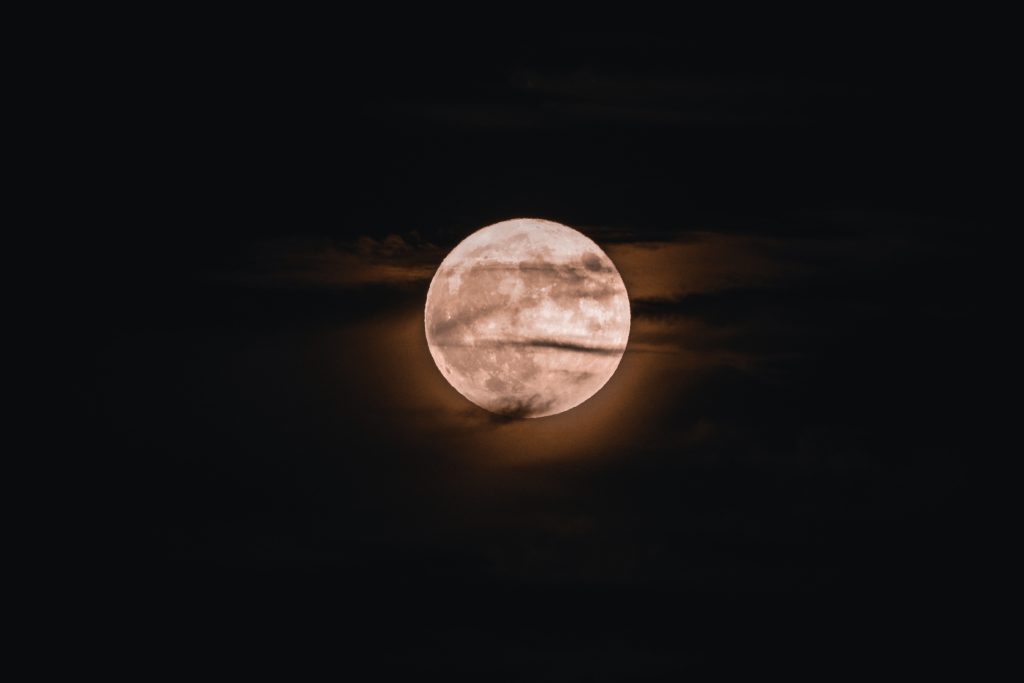
As September arrives, the summer nights begin to cool. Now we enjoy the kind of evening when if you’re out on your porch, you might reach for a sweatshirt as you watch the stars come out.
Meanwhile, out at Willistown Conservation Trust’s Rushton Farm, a busy late-summer day has come to a close. Earlier, a school group came by to see bird banding in action, and farm shareholders came to pick up fresh produce. But now, staff and visitors have left the gravel parking lot empty, and the summer sunset has given way to a faint glow of dusk.
Bird calls have subsided, replaced by a steady thrum of nocturnal insects. But for one creature, the day has just begun. A little brown bat just stretched its weary neck and took to the skies to begin its nightly feast. This time of year marks an exciting period in a bat’s life cycle, one when female bats fly while carrying their pups to teach them how to hunt.
The Witching Hour
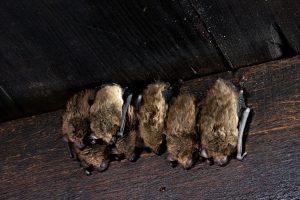
Recently, American bat species have been in decline. From white-nose syndrome — a fatal fungal disease that has wiped out more than 90% of some bat populations — to habitat loss, our beloved spooky species have been put at risk.
If you’ve ever had bats roost in your home, it can be easy to disparage these furry flyers as pests. Popular culture has also not been as kind to bats as other animals.
In reality, though, bats are uniquely adapted to their environment. And just like our beloved backyard bird species, bats play a critical role in the local ecosystem. As the world’s only flying mammals, bats play an important role in consuming large numbers of nighttime insects.
Agriculture’s Hidden Heroes
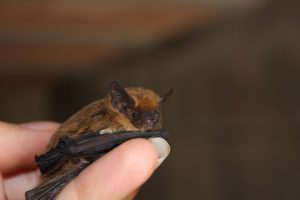
Throughout history, bats have been the unsung heroes of agriculture. By eating insects that feed on crops, bats in the U.S. are estimated to save farmers between $3.7 and $53 billion a year. While that’s a huge range, even that estimate doesn’t take into consideration bats’ importance as pollinators.
In the eastern U.S., where white-nose syndrome has decreased bat populations, farmers have had to increase pesticide use by over 30%. A single bat can eat thousands of insects in a single night — an amount about equal to half their body weight in food … every night!
Finding Space
Just like habitat for backyard birds, there’s a simple way to help local populations of bats: by providing them with wooden homes. In the greater Philadelphia area, there are nine species of bats that use our forests, streams and fields. Many local bat species are migratory, meaning they’ll move south during colder months, while others move to caves and abandoned mines or quarries to hibernate during the winter. But during warmer months, wooden bat boxes can provide a safe space for bats to raise their young.
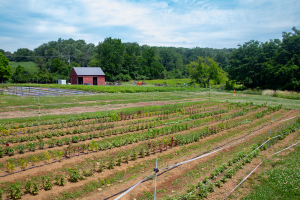
At Rushton Woods Preserve, a bat box hangs quietly from the barn overlooking the produce fields. For Willistown Conservation Trust, a bat box solves two problems at once: it protects produce from insects and helps support local bat populations.
At the farm and local preserves, several factors contribute to a successful bat box. Bats prefer boxes that are 15 to 20 feet off the ground and in a south- or southeast-facing location. Placing a box on a pole or the side of a barn is a great way to keep it warm in the sun and reduce the risk of predation from animals such as owls. Also, boxes located near streams and away from artificial lights tend to be most effective.
Working with bats, birds and wildlife means the Trust’s small farm doesn’t have to use pesticides or chemicals. Shrubby edge habitat and manmade wildlife boxes provide homes for wildlife to raise their young. In turn, the animals feast on insects and pests, making produce healthier for all.
Evening’s Watch
While bat watching is far from the national pastime that bird watching has become, late summer is a great time to see these insect-guzzling flyers in action. Agricultural fields and bodies of water provide ample food for these flying mammals and excellent viewing opportunities.
While not quite as action-packed as the latest top steaming series, spending time watching bats’ flying spectacle is rewarding. Just like crickets or American robins, the sounds of bats are part of the natural landscape in America and should be cherished.
Even as the sun goes down, nature continues its cycles as nocturnal animals come to life. And if you have a property bats would find welcoming, the answer to getting them to visit is fairly easy: provide habitat and let nature take its course.
As dusk dims the sky and night overtakes day, Rushton Farm’s busiest night-shift employees zig and zag across the night sky, with young ones watching on, anxiously awaiting their first hunt on their own. Away from crowds and passersby, bats’ nightly rhythm continues as it has for thousands of years.
The Willistown Conservation Trust, a nonprofit land trust, has protected over 2,980 acres of wildlife habitat, scenic views and agricultural lands in the Willistown area. Its mission is to protect land and inspire a lifelong love of the land through education. More at WCTrust.org.
Our Favorite Resources
- Aqua Terra Pools & Landscapes
- Archer & Buchanan
- Ball & Ball
- Berk Hathaway Holly Gross
- Berk Hathaway M Schwarz
- Chester County Day
- Compass Real Estate
- E.C. Trethewey
- Holland Floor Covering
- Howard Hanna Real Estate
- Jane E. Dorchester
- Keystone Gun-Krete
- Keller Williams Real Estate
- King Construction
- The Kline Organization
- Latta Kennedy Builders
- Main Street Cabinet
- Martin’s Flooring
- McComsey Builders
- Monument/Sotheby’s Int’l
- NV/Ryan Hones
- Period Architecture
- Precise Buildings
- Pronto Pools
- Renewal Dynamics
- Rittenhouse Builders
- Sheller Energy
- White Horse Construction
- Windle Design & Construction