
Build It and They Will Nest
Photos courtesy of Willistown Conservation Trust and Adam WolfBluebird houses in the Brandywine Valley
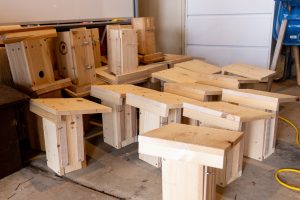
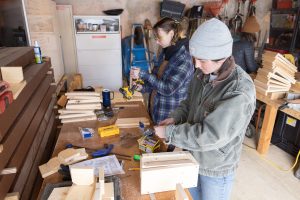
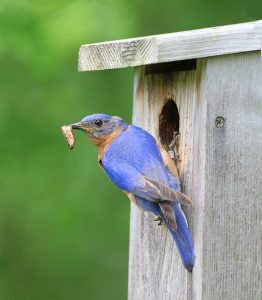 It was only 20 degrees outside, but a small, detached garage along Providence Road in Newtown Square had its bay doors open. This garage, a part of the Willistown Conservation Trust’s office space, had slowly been taken over by birdhouses and drill bits piled high and spilling over workshop tables.
The Trust, a local nonprofit devoted to protecting wildlife habitat, was gearing up for its annual spring Bluebird Project. Cold air blasted around the corner, but the staff didn’t seem to notice. In March, they delivered hand-built birdhouses to local landowners to help improve local bluebird populations. And now, in May, the bluebirds are laying their first clutch of eggs for the year.
The Bluebird Box
The idea of building bluebird houses or boxes is nothing new. During the ’60s and ’70s, the eastern bluebird was a species in great decline. With over 90% of the population gone due to DDT usage, invasive species and habitat loss, bluebirds had mostly disappeared from the landscape altogether.
The saving grace for these birds was the Peterson bluebird box, designed by Dick and Vi Peterson of the Minnesota Bluebird Recovery Program. Their new design for birdhouses provided important habitat for the dwindling species. Specially created to protect bluebirds, the nest box featured a wide roof and a hole sized to let the intended inhabitants in but keep predatory birds out. With new homes available, the bluebird population began making a comeback.
Local Bluebird Project
Throughout the years, bluebird societies, groups and clubs have popped up across the country, all aimed at continuing to care for this charismatic species. But it’s not always as easy as plopping a birdhouse in your yard and calling it a day.
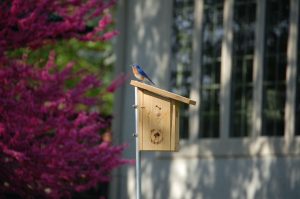
The Willistown Conservation Trust began its own program, now known as the Bluebird Project, in 2013. The program helps get premade bluebird boxes into the hands of local landowners while providing advice on where to place them — generally, along the edge of open space along a tree line.
But the project has evolved into something much greater than just putting up birdhouses. At its core, it’s about building relationships — helping people find spaces on their properties for wildlife, getting them the resources they need to be successful, and spreading a love of nature across the landscape. It can be hard to care about something you don’t understand or haven’t experienced. By helping hundreds of people connect with and witness the life cycle of a bluebird in their own backyard, their desire to protect and advocate for the environment blossoms.
The Bluebird Keeper
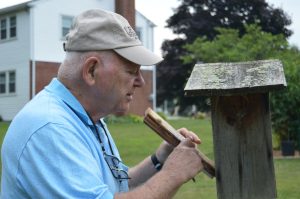
The program has also been greatly aided over the years by bluebird guardian angel Ken Leister, who has built over a thousand boxes for different businesses, community members and nonprofits. His inspiration for the work ignited over 20 years ago, when he saw a bluebird for the very first time using a bird box he had set out.
After learning more about the species, Leister found his new calling. He became the Bluebird Society of Pennsylvania’s State County Coordinator, developed the Bluebird Chat program at local hardware stores to help people have more success with their boxes, and much more. Yet despite his countless hours of community service, he never asks for anything in return, other than an occasional jar of honey from the Trust’s Rushton Farm. At 90, Leister still hasn’t retired from his love for bluebirds and now advises Willistown Conservation Trust staff on how to build their own boxes.
Backyard Bluebirds
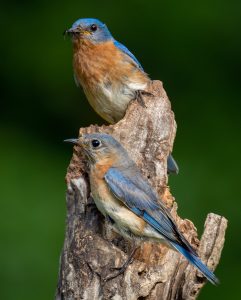
After 13 years of the Bluebird Project, the Trust has installed over 400 bluebird boxes on more than 200 different properties, helping raise over 10,000 birds, half of which were bluebirds. To see the project’s success, check out the Trust’s website with an interactive map where you can see bluebird icons pop up for each participating landowner. Click again to see a tally of how many boxes and approximate birds have been raised on each property. The map paints a picture of a local community with a shared vision: to make their backyards homes for wildlife. While no personal details are shown for privacy reasons, it’s inspiring to see just how many people have participated in the project.
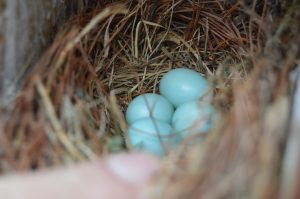
At the time of a 2018 County Lines Magazine article, “The Bluebird Keeper,” focusing on Leister’s work, the Bluebird Project had spread 150 bluebird boxes and raised an estimated 2,000 bluebirds. In the past several years, it has increased by over 260 boxes and 3,000 bluebirds. The best part about this project is that once the bird boxes are up, they last for 5 to 25 years, with only occasional cleaning.
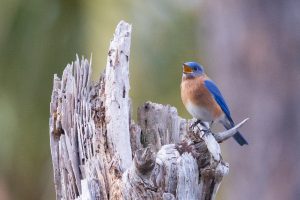
If you still aren’t sold on the idea of joining the effort, there are many more reasons to get involved with the Bluebird Project. Cavity-nesting birds, such as bluebirds that can’t create their own homes, continue to be threatened because there are too few places where dead trees are allowed to stand. And bluebirds provide countless hours of entertainment — no Netflix subscription required.
The Trust’s Bluebird Project, and similar ones across the country, show that when individuals band together, change can be made. We hope you’ll join in.
The Willistown Conservation Trust, a nonprofit land trust, has protected over 2,980 acres of wildlife habitat, scenic views and agricultural lands in the Willistown area. Its mission is to protect land and inspire a lifelong love of the land through education. More at WCTrust.org.
Our Favorite Resources
- Aqua Terra Pools & Landscapes
- Archer & Buchanan
- Ball & Ball
- Berk Hathaway Holly Gross
- Berk Hathaway M Schwarz
- Chester County Day
- DiSabatino Landscaping
- E.C. Trethewey
- Gordon Eadie Landscaping
- Howard Hanna Real Estate
- Jane E. Dorchester
- Keystone Gun-Krete
- Keller Williams Real Estate
- Latta Kennedy Builders
- Martin’s Flooring
- McComsey Builders
- Monument/Sotheby’s Int’l
- NV/Ryan Hones
- Period Architecture
- Precise Buildings
- Pronto Pools
- Rittenhouse Builders
- Sheller Energy
- White Horse Construction
- Windle Design & Construction