
Measuring Monarchs
Make plans while monarchs winter in Mexico
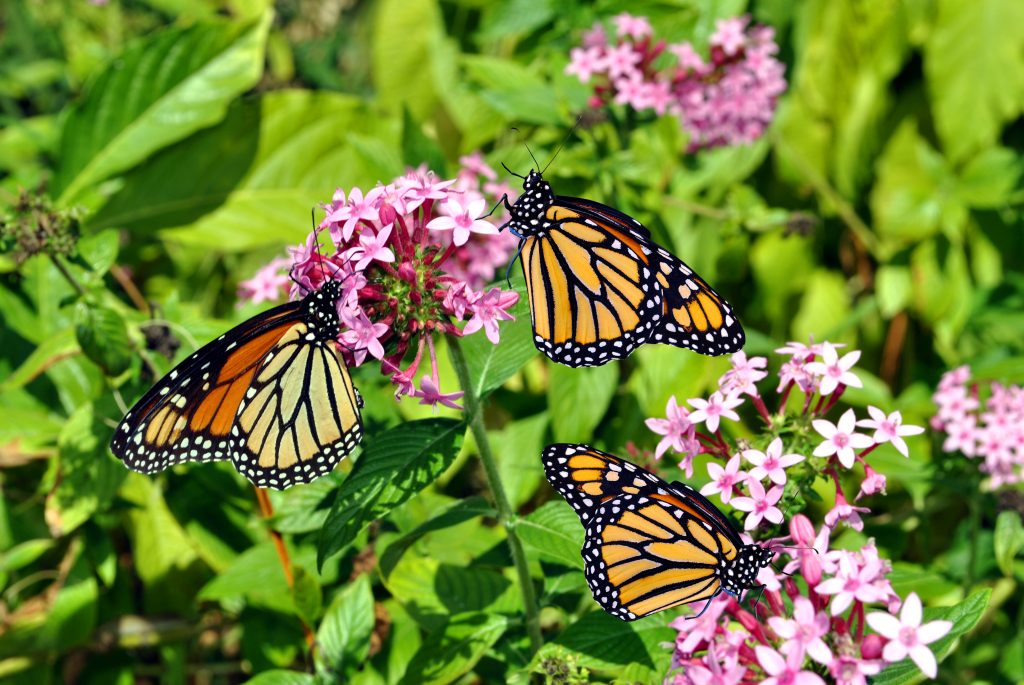
Every fall, monarch butterflies across eastern North America travel thousands of miles to spend the winter in the mountaintop forests of central Mexico. They cluster by the hundreds in oyamel fir trees — a sacred fir that protects the butterflies from the cold and precipitation — waiting for early spring, when they’ll begin the journey back to our region. For the past two decades, scientists in Mexico have estimated the population of monarchs overwintering there by measuring the acres of trees occupied by the butterflies.
Last winter, the population of winter monarchs in Mexico occupied about 4.4 acres, double the area of the previous year, giving hope for this beloved pollinator that has faced decades of decline. Experts believe the surge in numbers was due to favorable weather conditions during fall migration, unlike the previous couple of years, when there were extended droughts and major storm events.
But, before we start to celebrate this nearly 100% increase, scientists believe 15 acres of roosting monarchs is needed for the population to stabilize — far more than the 4.4 acres measured in 2024.
What can be done to help sustain this growth? While planting native milkweed species — the only plants larval monarchs eat and lay eggs on — is critical, it’s only a part of the complex puzzle of this species’ survival.
Avoid Captive Rearing
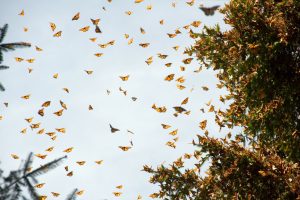
Surveys demonstrate that the summertime breeding population of monarchs is relatively stable, but the overwintering population has declined for the past 25 years, though less so in the past decade. This would indicate that the problem is migration.
One recent study, which aggregated about 2,600 community scientists’ observation of monarch “roosts” along the fall migration route, showed a decline in roost sizes that increased from north to south along the flyway. The data shows the roosts in Texas are about 80% smaller than they were 17 years ago.
While experts don’t fully agree on the reasons for this decline, many point to a dramatic increase in captive-bred monarchs. On the face of it, rearing monarch caterpillars in predator-proof enclosures seems like a great way to help the species. Yet, amateur captive breeding — which has increased apace with concern for the threatened species — can negatively impact overall species health by spreading disease, reducing genetic diversity and creating competition for limited resources. Several studies have shown that captive-bred monarchs have lower survival rates.
Plant Native Milkweed
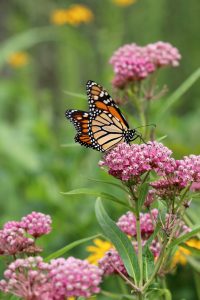
A little protozoan parasite, Ophryocystes elektroscirrha, or OE for short, is causing big problems for these imperiled pollinators. High OE levels in adult monarchs have been linked to lower migration success as well as reduced lifespan, mating success and flight ability. The parasite travels with monarchs, and, as the butterflies sip on milkweed flowers, they inadvertently deposit OE on the plants’ leaves. When caterpillars hatch and feed on the tainted foliage, they ingest the OE.
When native milkweed species die back, the parasite dies along with them. However, nonnative tropical milkweed (Asclepias curassavica) remains evergreen through winter, allowing OE levels to increase year over year. And, emerging research suggests that tropical milkweed may become toxic to caterpillars when the plants are exposed to the warmer temperatures associated with climate change.
As a way to help feed monarchs, more and more people have been planting tropical milkweed. Ironically, much like captive breeding, well-meaning people are contributing the butterfly’s challenges.
Plant Many Native Species
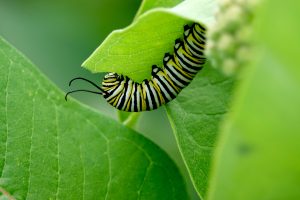
Native milkweed species — which include common milkweed (Asclepias syriaca), swamp milkweed (Asclepias incarnata), butterfly weed (Asclepias tuberosa) and poke milkweed (Asclepias exaltata) — are essential for monarch caterpillars. In fact, milkweed is the only species of plant the caterpillars can eat. It’s also a great source of nectar for all pollinators. To plant milkweed seeds in our area, do so in late fall, because they need the cold of winter to germinate.
But milkweed alone is not enough for adult butterflies. Planting a diversity of summer- and fall-flowering native plants ensures there are food sources throughout the adult stage of their life cycle. This not only helps monarchs, but also benefits native bees, wasps and flies. Top choices for pollinator-friendly plants include goldenrods, coreopsis, monarda, purple coneflower, Joe Pye weed, asters, phlox and ironweed.
“At Stoneleigh, we’ve observed a few nectar superstars that draw an impressive number of pollinators, including wild mint (Mentha arvensis), anise hyssop (Agastache foeniculum), showy goldenrod (Solidago speciosa), clustered mountain mint (Pycnanthemum muticum) and aromatic aster (Symphyotrichum oblongifolium),” said Ethan Kauffman, director of Stoneleigh: a natural garden. “These plants enrich biodiversity and are incredibly beautiful — great additions to any yard, garden or container.”
Help Collect Observations
The International Monarch Monitoring Blitz is a call to action for anyone interested in the species’ conservation to contribute to community science conservation efforts. The information collected by thousands of volunteers each year helps researchers assess population trends.
For example, gathering data on the number of both monarch caterpillars and milkweed plants allows for calculating a “cat”-to-milkweed ratio. Researchers use this ratio to estimate the size of the monarch population.
Want to get involved? Plan to join annual butterfly counts, including the North American Butterfly Association’s count on July 4 (NABA.org/Butterfly-Counts) and the Mariton Wildlife Sanctuary’s annual summer count (check the website for dates). Or any time of year, submit lepidoptera observations to iNaturalist and ButterfliesAndMoths.org/Node/Add/Sighting.
Natural Lands is dedicated to preserving and nurturing nature’s wonders while creating opportunities for joy and discovery in the outdoors for everyone. As the Greater Philadelphia region’s oldest and largest land conservation organization, member-supported Natural Lands has preserved more than 125,000 acres, including 42 nature preserves and one public garden totaling more than 23,000 acres. Nearly five million people live within five miles of land under the organization’s protection. Land for life, nature for all. NatLands.org
Our Favorite Resources
- Archer & Buchanan
- Arrowwood Landscape Design
- Ball & Ball
- Berk Hathaway Country Properties
- Berk Hathaway Holly Gross
- Berk Hathaway M. Schwartz
- Canvas Valley Forge
- Closet Factory
- Dayton Lock
- Dewson Construction
- DiSabatino Landscaping
- E.C.Trethewey
- Holland Floor Covering
- Homestead Structures
- John Milner Architects
- King Construction
- Main Street Cabinet
- Martins Flooring
- McComsey Builders
- Monument/Sotheby’s Int’l
- Mostardi Nursery
- Mountaintop Construction
- Period Architecture
- Precise Buildings
- Renewal Dynamics
- Rittenhouse Builders
- Sheller Energy
- Stove Shop
- White Horse Construction
- Windle Design & Construction