
Let It Grow
Vegetable gardening is taking root across the Brandywine Valley
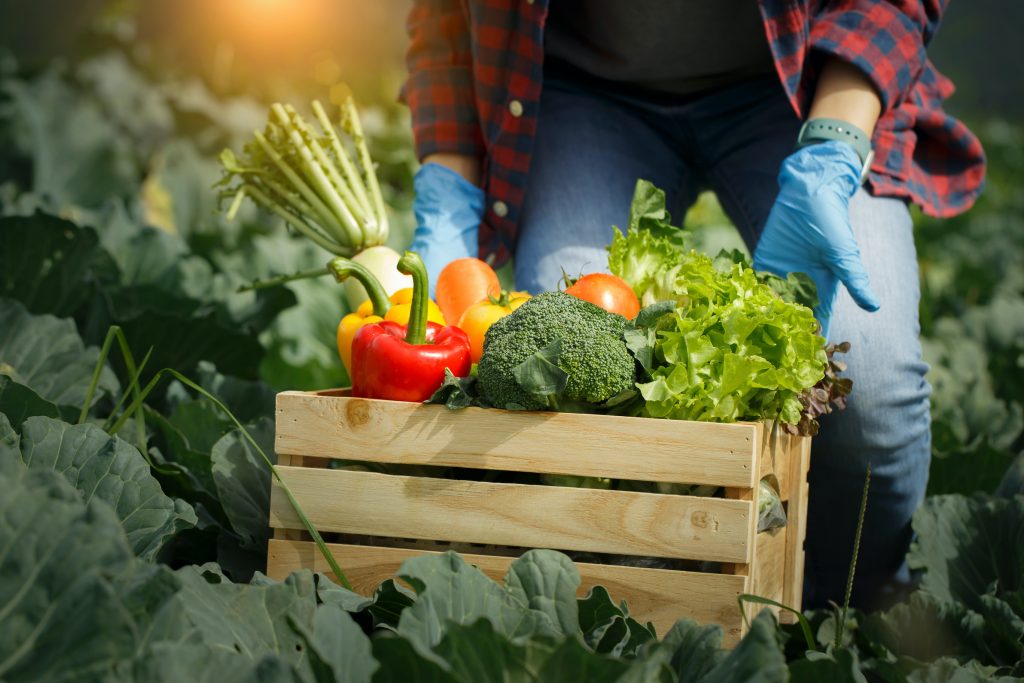 With the sun warming their backs and soil beneath their nails, aspiring gardeners across the Brandywine Valley are embracing the joy of growing their own food.
Part of the growing homesteading movement, which is focused on self-sufficiency and living off the land, vegetable gardening is on the rise. More than 55% of U.S. households now garden — that’s about 71.5 million gardens nationwide. And in a 2025 national survey, 71% of Americans reported that they were planning to grow a food garden. Even celebrities are getting in on the action, from Oprah and Michelle Obama to Mindy Kaling, Kate McKinnon and even Snoop Dogg.
Ready to dig in? Read on for expert tips to help you grow your own vegetables.
Veggies on the Rise
Maureen Dailey, leader of the Chester County Master Gardeners’ hotline, said her team has noticed a surge in interest in growing your own food. “We’re becoming a more educated society about what we put in our mouths,” she explained. “We’re presented with the basic food groups from early on, but learning how to eat safe, good foods is everywhere we look. The use of organic, pesticide-free foods is apparent to every grocer who wants to keep their customers happy.”
Of course, the rising cost of groceries — food prices jumped 2.9% last year and are predicted to rise another 3.1% this year — is pushing people to start gardening as well. “Good, healthy produce costs more these days, and nothing beats the taste of a fresh, homegrown anything. It’s a rewarding hobby and a good lesson about where food comes from — and a way to feel good about what we’re putting in our bodies,” Dailey said.
Plus, gardening is simply good for you. Besides the nutritional benefits of organic, homegrown produce, the physical act of gardening can improve cardiac health, boost immunity, decrease heart rate and increase motor skills, flexibility and strength. Regular exercise — and a healthy dose of vitamin D from time spent outside — improves mental health, too, relieving stress, anxiety and depression.
All those benefits extend to kiddos, too. Gardening is an excellent way to get kids off their screens and into the fresh air, offering exercise, hands-on discovery and time together as a family. It’s also a powerful learning experience, letting them see firsthand how food grows and where it comes from. In fact, one study found that children who participated in gardening projects scored higher in science than those who didn’t. And with any luck, even the pickiest eater may be more willing to try a vegetable they helped grow themselves.
Planning Your Garden
Thinking about growing your own vegetables? First, take some time to plan your garden. This starts with finding the right location. “Take a walk around your yard and see where the best place to put your garden would be,” Dailey recommended. The ideal spot for your garden will be sunny (most veggies need 6 to 8 hours of direct sunlight), well-drained and have easy access to water.
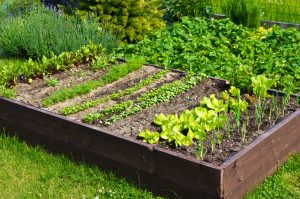
Next, decide the size and type of garden you want. Dailey suggests starting small. “The single biggest mistake new gardeners make is going too big. What starts out as a beautiful idea can become overwhelming and so time-consuming that failure often follows,” she said. “For a first-time vegetable grower, I would stay on the smaller side. The delight in seeing little plants come to life will give you the confidence to do more in the following seasons.”
For beginners, Dailey recommends planting in raised beds — large, bottomless containers made of wood, stone or concrete that sit on top of the ground. “They’re easier to maintain and don’t have to take up a lot of space to produce great crops,” she added. Other popular methods include row gardening — traditional in-ground garden beds, planting seeds directly in the ground — and container gardening — growing plants in containers like pots, hanging baskets and grow bags, ideal for apartments and small yards.
If you’re planting in raised beds, “The Old Farmer’s Almanac” recommends starting with a 4-by-4-foot or 4-by-8-foot bed. You’ll need to fill your beds with a good soil blend. Whether you make your own blend or buy one from a garden center, look for a mix of topsoil, compost and a mineral like perlite for structure, nutrients and good drainage.
Next, it’s time to decide what to plant.
Planting Veggies
Vegetables are divided into two main categories: cool-season and warm-season crops. Cool-season crops, as the name suggests, are best planted in fall or spring, before the last frost date — the last estimated date where temperatures drop below 32°. For West Chester, this year’s last frost is May 2, but some years it can be as late as mid-May. Look up your frost dates by ZIP code at Almanac.com/Gardening/FrostDates.
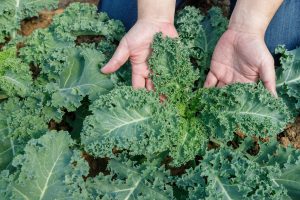
The easiest cool-season crops for beginners are leafy greens like collards, kale and mustard, all of which can be harvested multiple times before the end of their growing season. Decide whether you’ll plant directly from seeds or start with seedlings from your local garden center. Seeds can be planted a few weeks before the last frost, while seedlings do best when temperatures are between 60º and 68º. “Whether you’re using seeds or pre-started crops, read the tags. A wealth of information is provided as well as the proper timing to put plants outdoors,” Dailey advised.
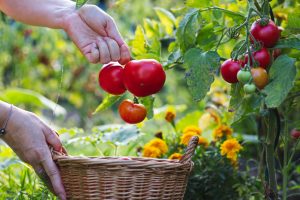
Warm-season crops, on the other hand, are planted in late spring, after the last frost. The best and easiest warm-season crops to grow in our area are cucumbers, zucchini, peppers, tomatoes and basil. Most warm-season crops — besides those in the melon and bean families — need to be planted as seedlings, so you’ll want to head to your local nursery.
“The ability to grow seeds indoors and transplant them successfully outdoors is a skill that may frustrate beginners, so I would highly recommend your first garden begins with plants,” said Dailey. “Produce can take up to 80 days or more from seed to crop, so starting with plants ensures you’ll see your vegetables by early to mid-summer at the latest.”
No matter what you plant, be sure to map out your garden beforehand, planning where in your beds each plant will go. Remember, less is more for beginners. “As little as one plant for each variety can produce enough food for an average family, especially if you have a small garden,” Dailey said.
Caring for Your Garden
Now that your veggies are planted, here’s what you need to know for your garden to thrive.
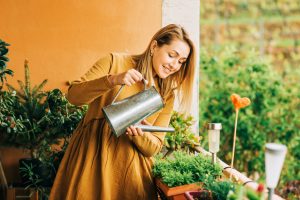
The most crucial step in growing a healthy garden is watering. A general rule of thumb is that plants need 1 inch of water per week. Most plants do best when watered deeply about three times a week (including rain), while seedlings will need to be watered twice a day until they are established. If you’re watering seeds, be careful not to wash them away — a mister on a hose, spray bottle or a cup with a gentle, steady hand work best.
The best time of day to water is early in the day, while dew is still on the leaves. If you can’t water in the morning, wait until evening — avoid the middle of the day, when much of your water will be lost to evaporation.
A good way to know if your plants need water is to feel the soil. If the soil sticks in your hand and you can shape it into a ball, it’s moist enough. But if the soil won’t stay together in your hand, or if the surface is hard, baked or cracked, it’s time to water. Check if the soil is dry an inch below the surface.
Regular maintenance will keep your garden happy and healthy. Prune overcrowded plants as needed, and control weeds by laying down organic mulch, slicing or chopping weeds with a hoe and hand-pulling. It’s best to start as soon as weeds appear!
You’ll also need to check your garden regularly for pests. “Being diligent in checking your beds can help make you aware of their presence. Some are active in the day, while others prefer the evening. You must become a detective and look even on the underside of the leaves,” said Dailey.
Different crops attract different pests, but common ones you’ll find in your garden include aphids, caterpillars, slugs and beetles. “Most can be handled by manually removing them, spraying the plants with a good blast of water, putting deterrents around the plants or using products like netting to keep pests away from plants,” Dailey said.
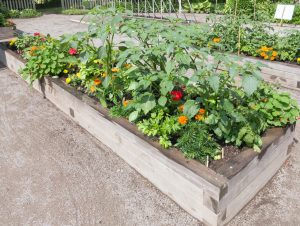
A great way to keep pests at bay is “companion planting” — planting flowers and herbs to lure harmful insects away from your veggies and attract beneficial insects to the garden. Native options include planting purple coneflower, black-eyed Susan, wild bergamot and goldenrod near your veggies. Plus, it brings a welcome boost of color and beauty to your garden!
With careful planning and diligent maintenance, you’ll soon be harvesting the fruits — or rather, vegetables — of your labor. Few things compare to the flavor of produce picked fresh from your own garden, or the satisfaction of knowing exactly where your food came from. When the season winds down, clear out the garden, enrich the soil and begin dreaming about what you’ll grow next year.
Happy planting!
For gardening help, reach out to your local Penn State Extension branch. For Chester County, call 610-696-3500 or email ChesterMG@PSU.edu with your questions and photos. More at Extension.PSU.edu.
Your Year in the Garden
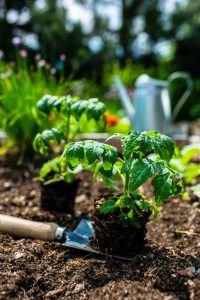 Ready to get planting? Here’s a breakdown of which vegetables to grow each season in our area.
Early Spring: Plant cool-season crops
- Mid-March to Mid-April: peas, fava beans, onions, leeks, garlic, greens (collards, kale, mustard, etc.), turnips, white potatoes, cabbage
- Late March to Late April: shallots, spinach, bok choy, parsley, cabbage family (broccoli, collards, etc.), leeks, onions
- Late March to Mid-May: lettuce, radishes, beets, carrots
- Early April to Mid-June: Swiss chard, beets
- Mid-April to Mid-May: celery
Late Spring: Plant warm-season crops
- Early May to Mid-June: watermelons, winter squash, melons, summer squash, cucumbers, pumpkins, sweet potato
- Early May to Late June: okra, Chinese cabbage, sweet corn, peanuts, Lima beans
- Mid-May to Late June: black-eyed peas, eggplant, peppers, tomato, basil, gandules (pigeon peas)
- Mid-May to Mid-July: beans (bush, pole, shell, dried)
Summer and Fall: Plant cool-season crops
- Early to Mid-June: collards, cabbage family, celery
- Early July to Mid-August: carrots, beets, Swiss chard, cabbage family (broccoli, etc.)
- Mid-July to September: radish, spinach
- Early August to Early September: salad greens, greens (mustard, etc.), peas
- Early September to Early October: garlic (for spring harvest), cover crops (hairy vetch, annual rye grass, oats)
Adapted from Penn State Extension’s “Master Gardeners Philadelphia Planting Guide.” More at Extension.PSU.edu.
Our Favorite Resources
- Archer & Buchanan
- Arrowwood Landscape Design
- Ball & Ball
- Berk Hathaway Country Properties
- Berk Hathaway Holly Gross
- Berk Hathaway M. Schwartz
- Closet Factory
- Dayton Lock
- Dewson Construction
- DiSabatino Landscaping
- E.C.Trethewey
- Holland Floor Covering
- John Milner Architects
- Keystone Gun-Krete
- King Construction
- Level Edge Construction
- Main Street Cabinet
- Martins Flooring
- McComsey Builders
- Monument/Sotheby’s Int’l
- Mostardi Nursery
- Mountaintop Construction
- Period Architecture
- Precise Buildings
- R-P Nurseries
- Red Tail Restoration
- Rittenhouse Builders
- Schnatz & Rohrer Landscaping
- Sheller Energy
- Stable Hollow Construction
- Stove Shop
- Thornbury Services
- White Horse Construction
- Windle Design & Construction