
Brandywine Table: Harvesting Spring
Asparagus five ways
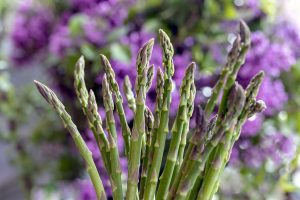 Blame Punxsutawney Phil. We were ready for spring weeks ago!
As we finally move out of this hard winter, this month’s Brandywine Table celebrates the vegetable that most symbolizes springtime: asparagus. It erupts from the earth with a high-society pedigree. Long before it became a staple of the Brandywine lunch circuit, Roman cooks prized it so highly that Emperor Augustus coined the phrase “faster than asparagus cooks” to signal urgency.
Classical writers also credited asparagus with restorative virtues. Greek and Roman texts praised it as a tonic of vitality, and later herbalists described it as cleansing and diuretic — valued for supporting digestion and kidney health.
Its fleeting spring arrival and upright form gave rise to aphrodisiac lore as well, more symbolic than scientific but persistent across centuries. During the Middle Ages, monastery gardens helped preserve its cultivation, maintaining knowledge of perennial crops that would reemerge in European kitchens generations later.
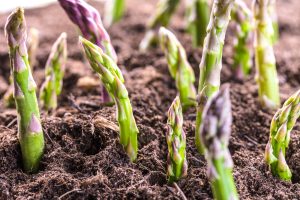 While most of us in the Brandywine Valley favor the sun-kissed green stalks that signal spring’s resurrection, our European counterparts have long elevated a paler form of asparagus. In 17th-century France, white asparagus earned the moniker “Ivory of the Garden.” This variety was cultivated under mounds of soil to prevent chlorophyll from forming and was favored by King Louis XIV, who demanded it well beyond its natural season.
Producing white asparagus is significantly more labor-intensive — each spear must be carefully buried and harvested before it reaches sunlight — making it a visible marker of wealth and status. That devotion spread east. From mid-April through June 24, Germany enters Spargel Fieber — asparagus fever — a celebratory obsession. It is agriculture as ceremony.
Asparagus is also a lesson in engineered patience: a single bed can produce for up to 20 years, returning each spring with more vitality than the last. It isn’t just a side dish. It’s the soul of the spring table.
To taste that soul locally, look to local farmers markets or to historic Thornbury Farm in West Chester. Under the stewardship of Randell Spackman, this farm prioritizes natural cultivation without synthetic fertilizers or chemical sprays. Situated on the very grounds of the Battle of Brandywine, the farm is best known for its weekly CSA baskets and bustling farmstand — a perfect source for a spring menu.
From simple air-fried asparagus spears to indulgent penne with crème fraîche, smoked salmon and caviar — yes, those salt-cured salmon roe “pearls” absolutely count in our book — to a classic Gruyère quiche and a protein-packed red quinoa salad, these recipes prove spring has finally sprung. After months of root vegetables and braises, asparagus reminds us that the table, like the season, is ready to turn the page.