
Brandywine Stories: Learning Liberty — No Buses, No Bells, No Public Schools
What schooling looked like in Revolutionary Chester County
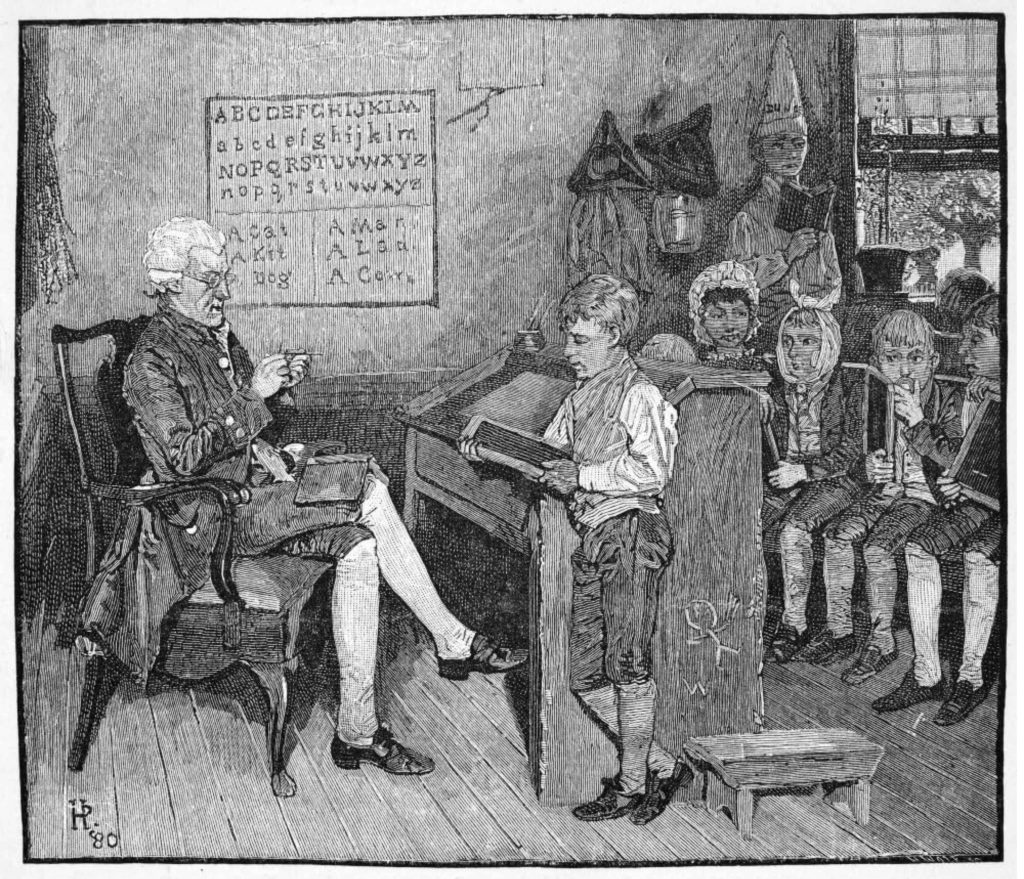
Chester County children walking to school in the 1770s didn’t head toward a bus, a brick school or a grade-level classroom. Their destination might be a Friends meetinghouse, a minister’s home, a neighbor’s kitchen or a community schoolhouse. Some children learned at home or through work, although many never entered a classroom at all. Before public education, schooling depended on geography, money, faith and how much labor was needed at home.
Early Schools
Quakers, Presbyterians and German immigrant communities were among Chester County’s strongest supporters of education, as each community had to find a teacher, raise money, provide a room and decide who could attend. Families may have paid three cents a day or two dollars per quarter to send a child to school. Those children who didn’t attend school might learn from relatives or ministers, through household work, or as apprentices in a trade. Around the time of the Revolutionary War, education was not yet a public promise but an opportunity assembled by families, congregations and neighborhoods.
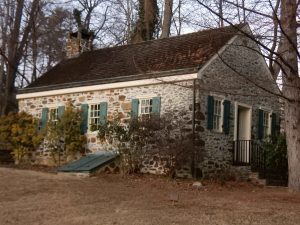
For example, in Tredyffrin wealthy German immigrant Jacob Sharraden set aside land for a church and school. A log schoolhouse was built there in 1768, then replaced in 1788 by the stone building now known as Old Eagle School. During the Valley Forge encampment, pupils may have seen soldiers moving along nearby roads or heard supply wagons passing on their way to the army.
Splinters, Slates and Practical Sums
For many children, education began with religion. Learning to read made it possible to study the Bible, and copying Scripture and moral sayings was thought to reinforce honesty, obedience, conscience and duty. Schooling was meant to shape character as well as the mind.
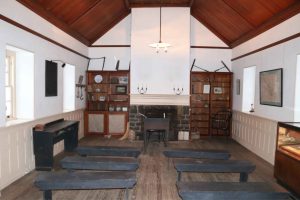
Classrooms were plain and uncomfortable. At Old Eagle, children may first have sat on split logs, flat side up with splinters included. Younger pupils sat near the teacher, with older students behind them. Heat came from a fireplace and later an iron stove. On gray days, candles in wooden wall racks lit the room.
Students shared books and approached the schoolmaster’s desk to recite. Beginners learned letters and sounds from primers or hornbooks, small wooden paddles holding a printed lesson beneath a protective transparent sheet of animal horn. Older pupils practiced reading, spelling, penmanship and arithmetic. Girls might work on a needlepoint sampler to practice their letters.
Time in school also competed with chores at home. Children fetched water, fed animals, planted seeds, churned butter and helped preserve food. In craft and merchant households, children assisted with the family business. Older children might enter apprenticeships, combining labor with vocational instruction. School attendance could be interrupted for days or weeks by farm demands, bad roads and winter storms.
Some schools taught beyond basic literacy and numeracy. At New London Academy, founded in 1743, selected students studied Latin, Greek and moral philosophy. Pupils there included future national leaders and signers of the Declaration of Independence.
The contrasts in education were enormous. One child might learn just enough to read and write by age 12, while another might receive an education designed for public leadership. Schooling could open doors, but only for those with the opportunity to approach them.
Learning Liberty and Its Limits
The schoolroom reflected Revolutionary America’s central contradiction — a growing language of liberty alongside unequal access to its tools. Quaker communities often placed greater emphasis on educating girls than many of their contemporaries did. By the late 18th century, Friends were also thinking more deliberately about how schools should be organized. Owen Biddle’s “Plan for a School” helped shape the thinking that led to the founding of coeducational Westtown School in the late 1700s.
But still education was not equal for all. Pennsylvania did not outlaw teaching enslaved people, yet Black children faced great educational barriers. In nearby Frederick Township, a Moravian boarding school enrolled African, African American, white and Native American boys during the 1740s, but such opportunities were rare for Black and Native students. The education offered to these students might be intended to teach Christianity and obedience rather than independence.
No colonial schools taught liberty as Americans understand it today, and lessons often reinforced authority, faith and social rank. Still, literacy opened newspapers, pamphlets, petitions and Scripture. Inside Chester County’s schoolrooms, children learned their letters and practiced their sums. They also learned what their communities expected, became leaders themselves, and sometimes gained the tools to change the world they inherited.
What Was in a Colonial Schoolbook?
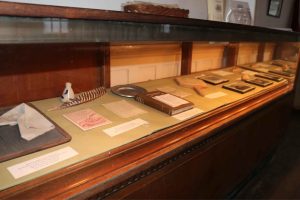
A colonial student’s “backpack” might hold a slate and slate pencil, primer, hornbook, loose paper, quill and copybook. Beginners practiced letters, syllables and Bible passages. Older pupils copied moral verses, handwriting models and business forms, then solved arithmetic problems involving money, land, cloth or crops.
Because books and paper were expensive, memorization and recitation mattered. A slate could be wiped clean and reused; a quill had to be cut, sharpened and dipped in ink. The supplies were spare, and lessons were designed to prepare children for work, faith and community life.
 Kim Andrews is part of the Chester County Community Foundation’s America 250 initiative and a nonprofit governance consultant. She wrote this article to raise awareness of Chester County’s role in our nation’s fight for freedom and build engagement for 2026, the 250th anniversary of the Declaration of Independence. For more information and to get involved, America250ChesCo.org or CCCF250.org.