
Brandywine Stories: George & Martha Washington — Love, War and Christmas Past
The Washingtons' holiday journey from Brandywine to Mount Vernon
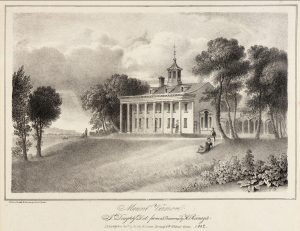
It was a cold Christmas Eve in 1783 when General George Washington rode up the thickly wooded, winding road leading to Mount Vernon. As the forest opened into meadows, a myriad of emotions must have rushed through his mind as his beloved home, candlelit at twilight, came into view. Perhaps he simply hoped that Martha’s decadent yuletide Christmas Pye awaited him.
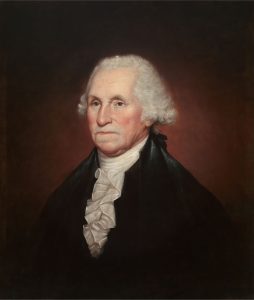
The day before, Washington had resigned as General of the Continental Army, informing the United States Congress that “having now finished the work assigned to me, I retire from the great theatre of Action … I hereby offer my Commission, and take my leave of all the employments of public life.” Like most of the exhausted, but free, nation, the Washingtons were overdue for a peaceful holiday season. The war had raged for over eight years.
George and Martha
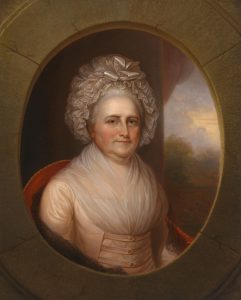
The early American power couple exchanged vows on the Twelfth Night of Christmas on January 6, 1759. Though neither George nor Martha left written reflections on their wedding, family members recalled several days of festivities.
George, then 27, married recently widowed Martha Dandridge Custis and welcomed her two children, Jack and Patsy, to Mount Vernon. At 28, Martha was no shrinking violet. She had already proven herself capable of managing her late husband’s expansive estate, which included numerous enslaved people.
Together, the Washingtons settled into married life, overseeing a large property and household while carrying worries familiar to today’s parents. Son Jack was more drawn to romance than study, and daughter Patsy struggled with epilepsy, passing away in 1773 at just 17.
Wartime Marriage
Meanwhile, the American colonies careened toward war. On June 15, 1775, George Washington accepted command of the newly formed Continental Army and set off to Cambridge, Massachusetts. Martha joined him in time for Christmas, facing her new role as “Lady Washington,” as she was known, with calm reserve, while inwardly “shuddering at the sound of guns.”
Holiday festivities would have to wait, as General Washington spent Christmas Day imploring Congress to provide more funds to feed and clothe the army. While Christmas celebrations in the late 1700s were quieter religious occasions, they still marked the passage of time.
The following Christmas night found Martha safely back at Mount Vernon, while her husband famously conquered snow and ice to lead his troops across the Delaware River toward victories in Trenton and Princeton. Though the Washingtons often spent Christmas apart during the war, George summoned Martha each winter, and she would join him as soon as safety and weather allowed.
In February 1777, Nathaniel Greene, a key general during the Philadelphia Campaign, wrote that “Mrs. Washington is excessive fond of the General and he of her. They are very happy in each other.” Another observed that Washington’s “Worthy Lady seems to be in perfect felicity while she is by the side of her Old Man as she calls him.”
Autumn 1777 brought the Battle of Brandywine and a series of defeats, surprise attacks and retreats through Chester County during British General Howe’s Philadelphia Campaign, which ended with the British occupation of Philadelphia. Washington’s army, exhausted, short on supplies and with morale fleeting, hastened to Valley Forge before Christmas.
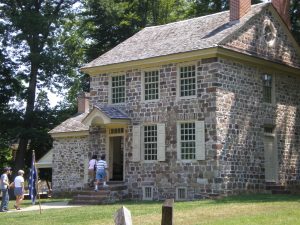
Martha arrived in February to her husband’s cramped fieldstone headquarters, which he described as “exceedingly pinched for room.” She wrote that “officers and men are chiefly in huts, which they say is tolerable comfortable. The army are as healthy as can well be expected.” Likely at George’s urging, she avoided describing the true hardships of Valley Forge. Conditions were far harsher, but despite the winter of disease, shortages, frigid temperatures and death, the Continental Army emerged unified, trained and resolute.
In January 1779, George and Martha marked their 20th anniversary at a Twelfth Night ball at the Philadelphia home of Samuel Powel, a former Philadelphia mayor. Nearly five years would pass before George finally rode up his driveway to Mount Vernon to join Martha at home for the holidays at last. With her husband safely home, Martha later remarked that she “anticipated that from that moment [they] should have grown old together, in solitude and tranquility: this … was the first and fondest wish of [her] heart.”
The war stretched across years and through Chester County’s fields and valleys, testing the Washingtons as much as their soldiers. Yet by war’s end, the promise of peace and the chance to spend Christmas together was finally restored.
Martha’s Christmas Recipes
After the war, the Washingtons celebrated Christmas with family and friends. Guests flocked to Mount Vernon for fox hunts and lavish dinners, festivities made possible by the long hours and days of preparation by enslaved household servants, cooks and butlers under Martha’s direction.
Martha’s surviving cookbooks described a Christmas pie filled with turkey, goose, pigeon and chicken that was spiced with salt, black pepper, nutmeg and cloves. In 1786, George expressed regret that David Humphreys, his former military aide, could not join them for their Christmas to “aid in the Attack of Christmas Pyes … on which all the company … were hardly able to make an impression.”
Another Washington family favorite was Martha’s decadent Great Cake, served at their Twelfth Night dinner. This rich confection, from a recipe passed down by granddaughter Martha Parke Custis, required 40 eggs, four pounds of butter, four pounds of sugar, five pounds of flour and five pounds of fruit, enriched with brandy, madeira, nutmeg and mace.
Modern adaptations of Martha’s Christmas Pie and Great Cake recipes (making a smaller quantity with just three eggs) can be found at MountVernon.org/Inn/Recipes.
 Heather Reiffer is an A250 Friends Outreach Officer of the Community Foundation and nonprofit consultant. She wrote this article to raise awareness of Chester County’s role in our nation’s fight for freedom and build engagement for 2026, the 250th anniversary of the Declaration of Independence. To get involved, contact America 250 Friends at the Chester County Community Foundation, A250Friends.org.