
Brandywine Stories: Before the Storm
Chester County on the eve of revolution
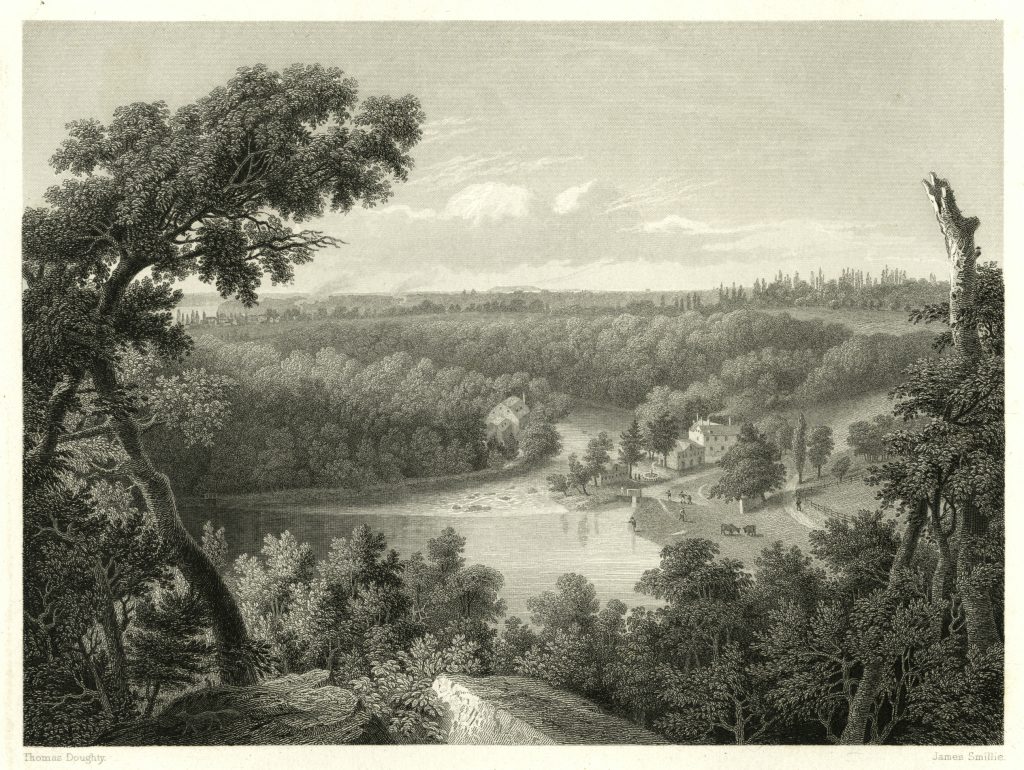
In 1776, Chester County was not waiting at the edge of the American Revolution — it was already being drawn into it.
Just west of Philadelphia, the county had what a rebellion needed: fertile farms, busy mills, iron production and roads linking the countryside to the colonial capital. But it was also a place of uncertainty. Chester County was home to people who wanted independence, people who remained loyal to the Crown and many, especially Quakers, who wanted no part of war at all.
Why Chester County Mattered
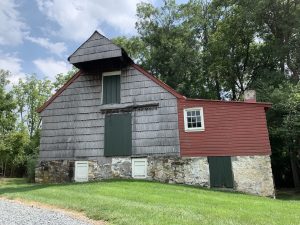
That tension made Chester County important on the eve of revolution. Long before the Battle of Brandywine turned its fields into a battlefield, the county was already a place where resources, geography and divided loyalties pushed history toward crisis. Chester County did not become important when the British army arrived in 1777. It was important before that, which is why the war came here.
Its importance began with abundance. Chester County was one of the most productive agricultural landscapes in the region. Its farms produced grain, livestock, hay and flour. Its mills turned harvests into usable goods. Its roads and waterways moved supplies toward Philadelphia, where resistance was hardening into open revolt. Ironworks in the wider region added strength, linking labor, materials, transport and trade in ways that made southeastern Pennsylvania central to the patriot cause.
Chester County mattered because it worked. It fed people, moved goods and connected places. Once war began to gather force, those strengths also made it exposed. Yet, although the county’s economy helped sustain the Revolution, its people did not move in lockstep behind it.
Overlapping Loyalties
The old shorthand of patriots on one side and loyalists on the other does not come close to describing Chester County in 1776. The reality was more tangled. Some residents embraced independence. Some remained loyal to Britain. Some hoped for reconciliation. Others simply wanted peace and enough distance from politics to get through the season. In a county with a strong Quaker presence, many opposed violence on principle, even as events around them became harder to ignore.
Randell Spackman, owner of Thornbury Farm and steward of part of the Brandywine battlefield landscape, says the county was full of overlapping loyalties rather than clean divisions. “There were many layers to people’s beliefs,” he said. “Chester County was volatile because neighbors could think very differently and you might not know where someone stood until events forced their position into the open.”
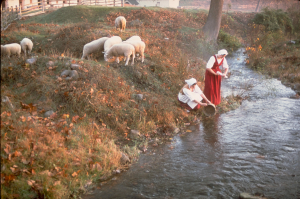
That mattered because this was not a place of strangers. People traded with one another, worshiped near one another, borrowed, sold, hired and depended on one another. Even those trying to remain outside the conflict were tied to the same local economy and the same local consequences.
Spackman noted that many Quakers wanted, above all, to be left alone. But that became harder as the imperial crisis deepened. “People were trying to carry on with ordinary life,” he said, “but once separation became real, it became much harder to stay untouched by it.”
That’s part of what makes Chester County such a revealing place to look at in 1776. It not only supplied the Revolution, it absorbed the strain of it. The debates were local; loyalties were personal. Because the county sat so near Philadelphia, every escalation in the city sent pressure rippling into the countryside.
A Turning Point
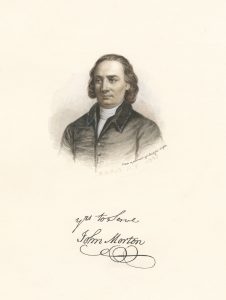
One local figure captured that turning point especially well. John Morton, then of Chester County, had long been known as a political moderate who hoped for reconciliation. Yet in 1776, he cast Pennsylvania’s decisive vote for independence in the Continental Congress. His decision tied Chester County directly to the Declaration and reflected the larger turn underway: from protest to separation.
On the ground, that change turned into action. Militias organized. Committees of correspondence, inspection and safety helped turn resistance into local governance. Public life began sorting itself more clearly around allegiance. Even those who hesitated or resisted taking sides could not avoid the effects.
And geography kept tightening the pressure. Chester County’s roads, river crossings and rolling terrain made it valuable to anyone moving toward Philadelphia. Its farms could feed armies as easily as families. Its location, so useful in peace, would soon prove dangerous in war.
By the end of 1776, Chester County had become too important, too connected and too divided to remain untouched. Its fields, mills, ironworks, roads and people had already made it part of the Revolutionary story. In 1777, war would arrive with full force. But the storm was already gathering.
Why Quaker Chester County Was So Complicated
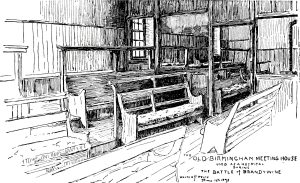
Chester County’s strong Quaker presence made the coming of the Revolution especially complicated. Many Friends opposed violence on religious principle and sought to stay apart from war. But neutrality was not always possible, and not all Quakers made the same choice. Those who supported militia service or the Revolutionary cause could be disciplined or written out of Quaker meeting, cut off from a faith community central to daily life. In Chester County, the conflict did not simply split patriots from loyalists. It also created painful divisions within Quaker families and meetings, where political choices could carry spiritual and social consequences.
 Kim Andrews is part of the Chester County Community Foundation’s America 250 initiative and a nonprofit governance consultant. She wrote this article to raise awareness of Chester County’s role in our nation’s fight for freedom and build engagement for 2026, the 250th anniversary of the Declaration of Independence. For more information and to get involved, CCCF250.org.